WHO Framework Convention on Tobacco Control

WHO Framework Convention on Tobacco Control

Overview

Secretariat of the WHO FCTC
© Credits

The WHO Framework Convention on Tobacco Control (WHO FCTC) is the first international treaty negotiated under the auspices of WHO. It was adopted by the World Health Assembly on 21 May 2003 and entered into force on 27 February 2005. It has since become one of the most rapidly and widely embraced treaties in United Nations history.

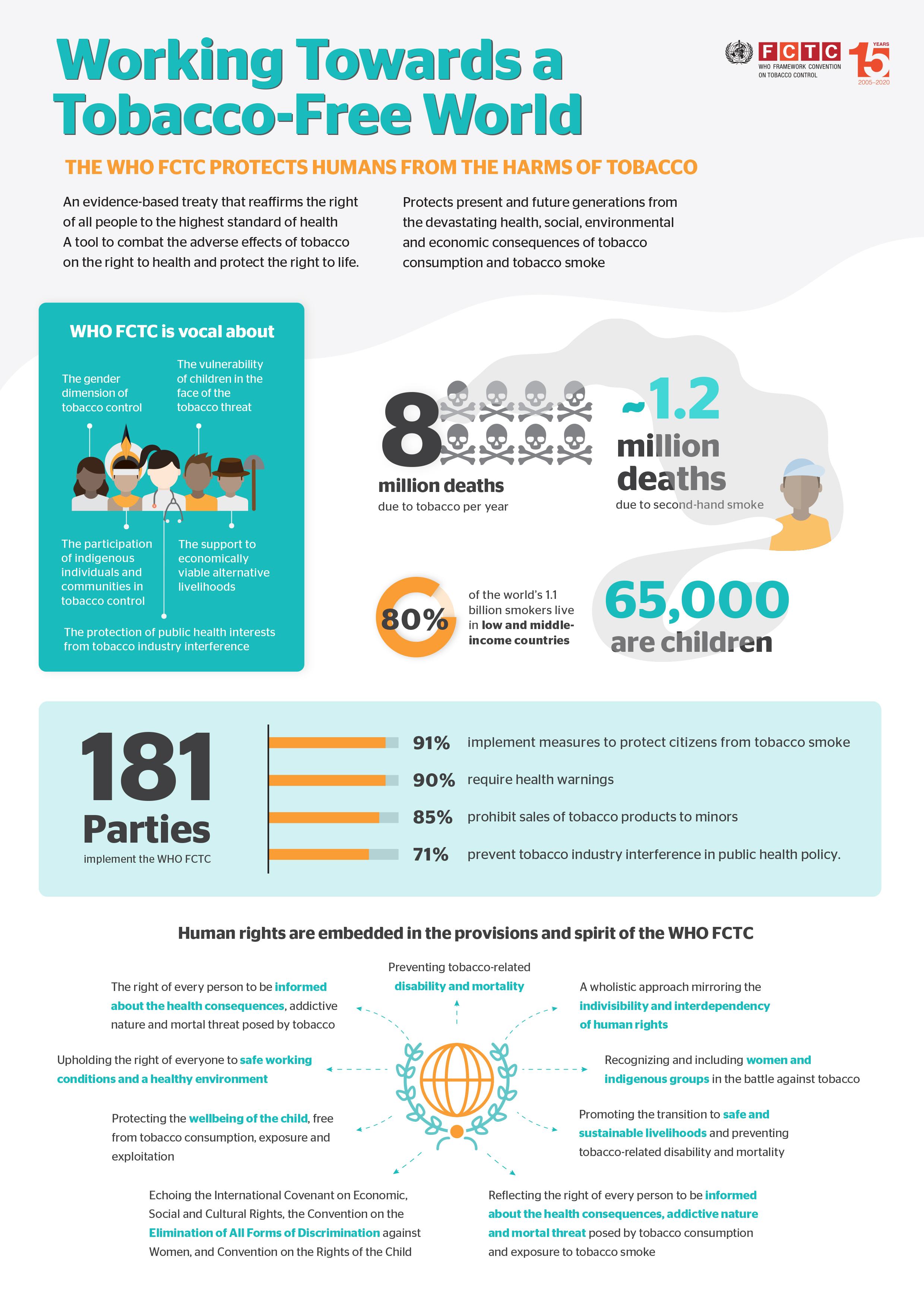
The WHO FCTC was developed in response to the globalization of the tobacco epidemic and is an evidence-based treaty that reaffirms the right of all people to the highest standard of health. The Convention represents a milestone for the promotion of public health and provides new legal dimensions for international health cooperation.

The WHO Framework Convention on Tobacco Control: an overview

Overview

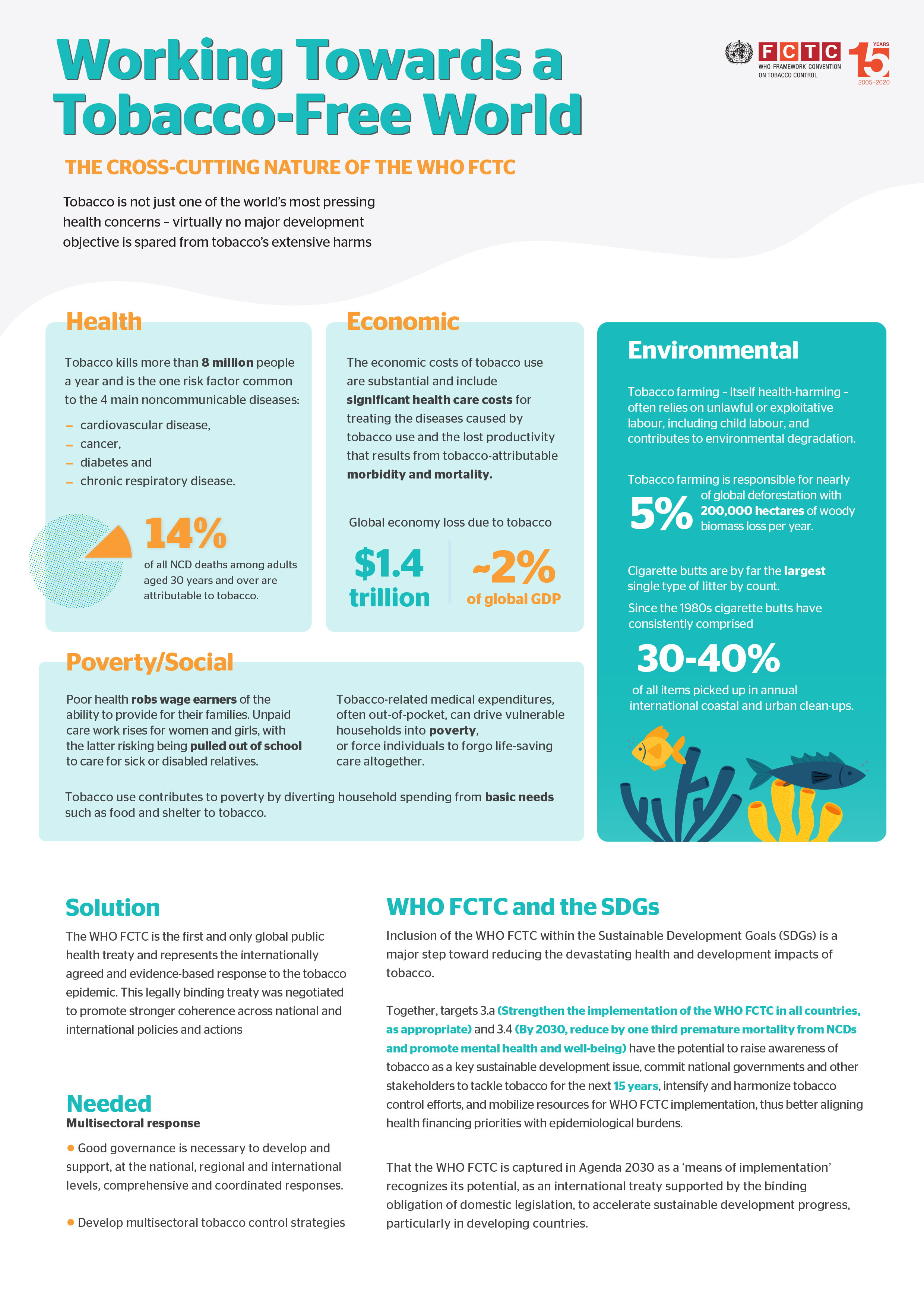
The WHO Framework Convention on Tobacco Control (WHO FCTC) is the first global public health treaty. It is an evidence-based treaty that reaffirms the right of all people to the highest standard of health. The WHO FCTC was developed by countries in response to the globalization of the tobacco epidemic. It aims to tackle some of the causes of that epidemic, including complex factors with cross-border effects, such as trade liberalization and direct foreign investment, tobacco advertising, promotion and sponsorship beyond national borders, and illicit trade in tobacco products.


WHO Team
WHO Framework Convention on Tobacco Control DGO
Secretariat of the WHO FCTC
© Credits

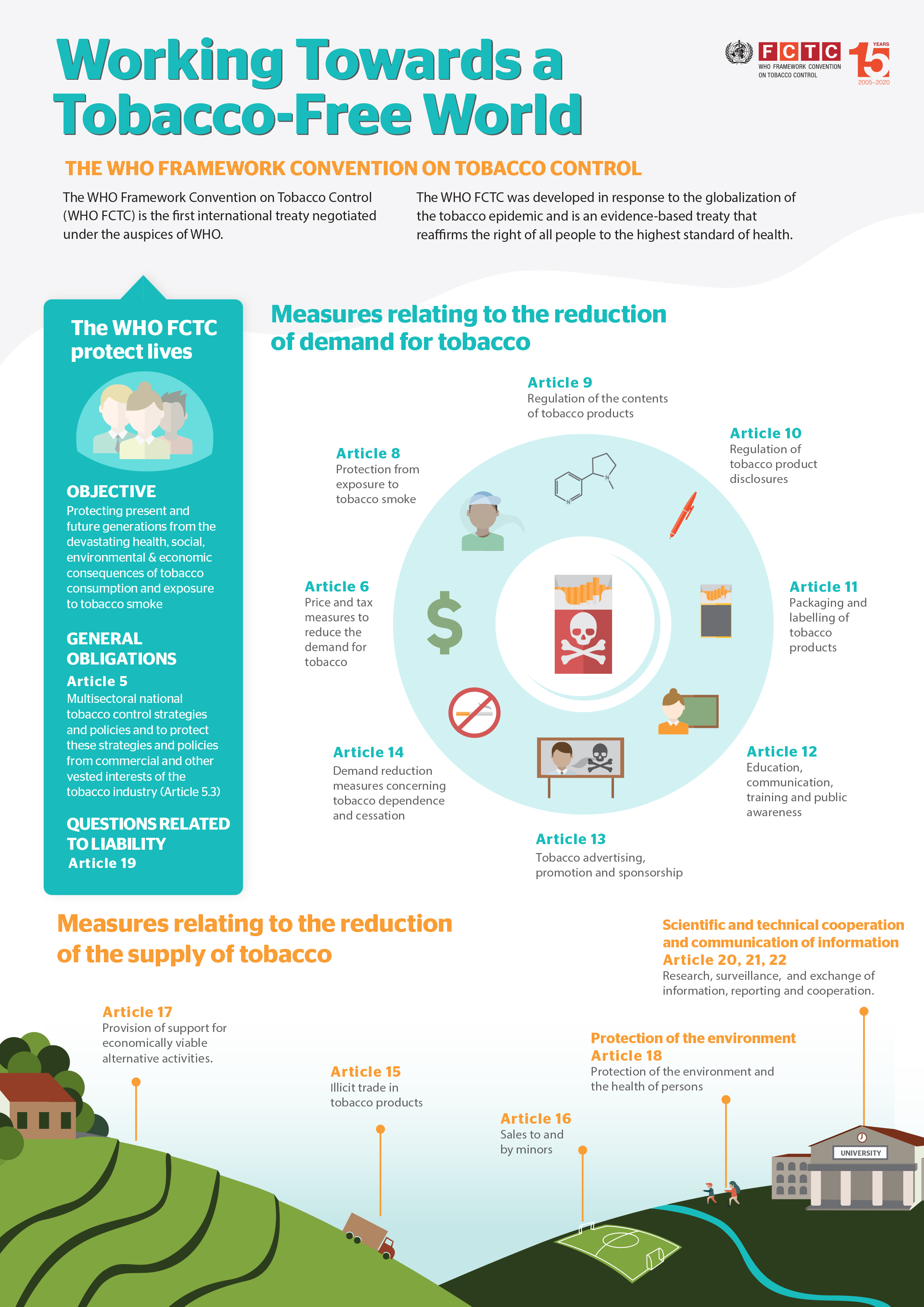
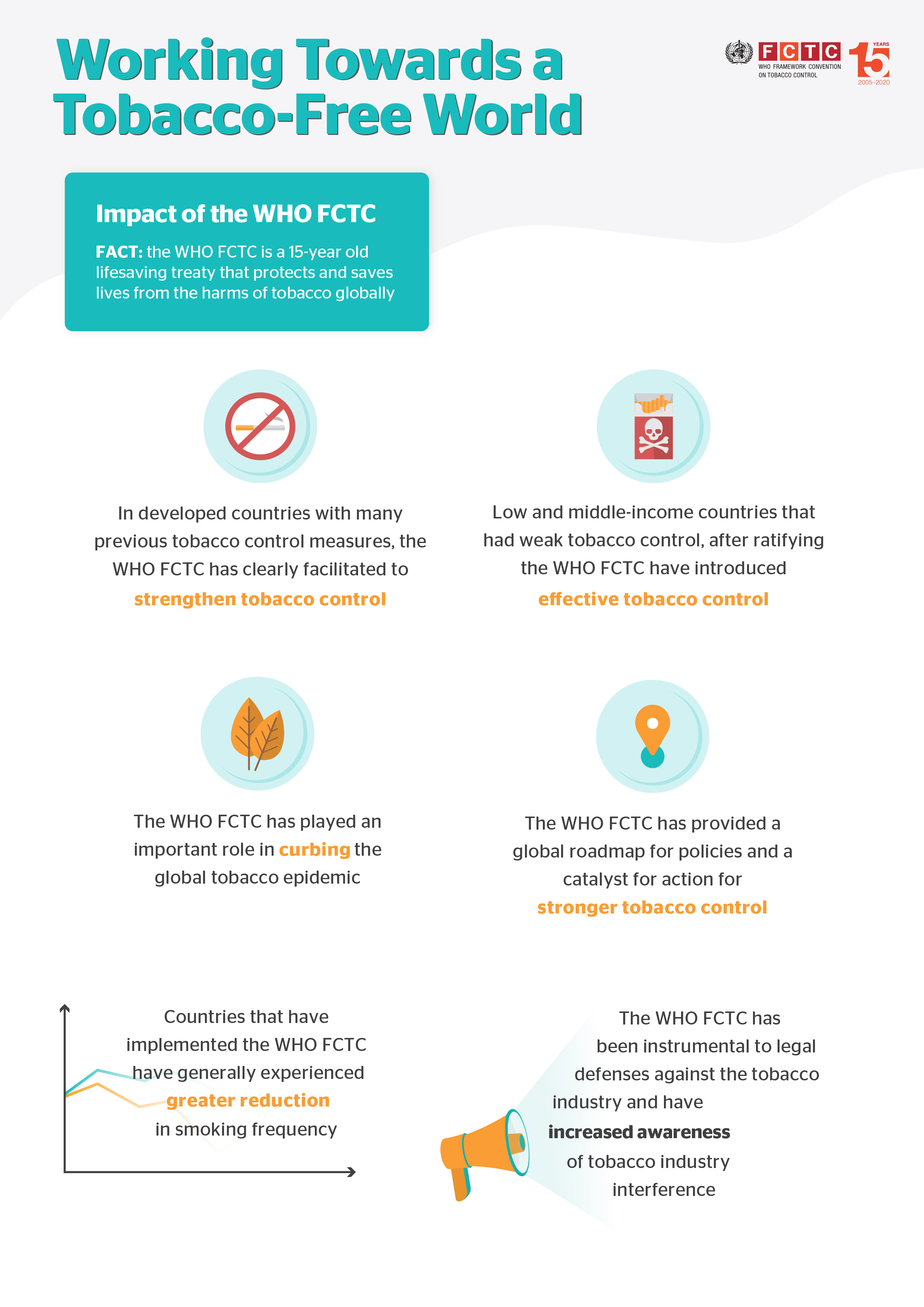
Infographics